There is perhaps nothing quite as universally panic-inducing for a property owner as the sudden, unmistakable sound of rushing water inside the walls, or waking up in the middle of the night to step into a rapidly expanding puddle of freezing or scalding water. In those initial, disorienting moments, the sheer volume of water capable of escaping a pressurized system is staggering. A single burst pipe can unleash hundreds of gallons of water in a matter of minutes, quickly saturating drywall, destroying hardwood floors, ruining irreplicable heirlooms, and compromising the very structural integrity of the building.
The reality of these liquid crises is that time is the absolute most critical factor. The difference between a minor inconvenience requiring a mop and a catastrophic event requiring thousands of dollars in professional remediation often comes down to how you react in the first ten minutes. Beyond the immediate structural damage, standing water creates the perfect breeding ground for toxic mold growth, which can begin taking hold in as little as twenty-four to forty-eight hours, turning a physical property issue into a severe respiratory health hazard.
The purpose of this comprehensive guide is to cut through the panic and provide you with an actionable, step-by-step manual for survival. We will walk you through exactly what to do—and crucially, what not to do—in the chaotic minutes and hours following a major system failure.
By understanding the distinct phases of crisis management, you can protect your property and your wallet. We will cover the immediate stoppage of water flow, the essential electrical and physical safety protocols you must observe, strategies for immediate damage control and containment, the process of bringing in professional remediation, and the proactive steps you can take to prevent a recurrence. Take a deep breath, read carefully, and equip yourself with the knowledge to handle the unexpected.
Section 1: Shut Off the Water and Secure the Area
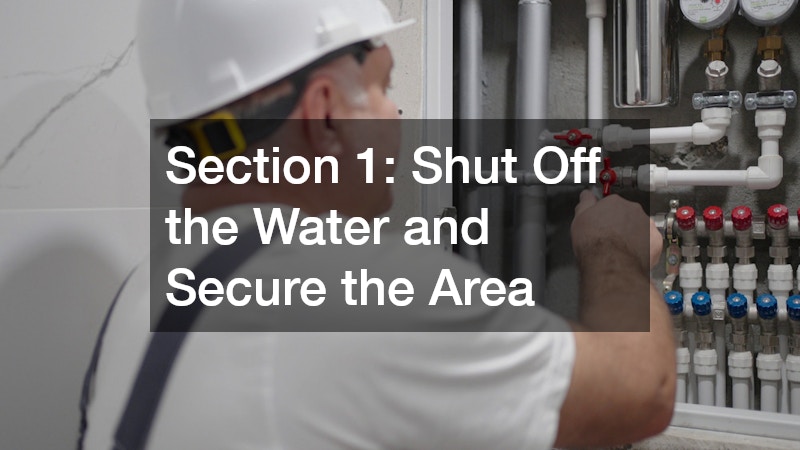
The absolute first priority in any water-related catastrophe is stopping the flow at its source. You cannot begin to clean up or assess the damage while pressurized water is still actively flooding the space. This requires a calm, methodical approach to locating the right valves.
-
Locate and Turn Your Main Shutoff Valve: If you are dealing with a massive leak, a burst overhead pipe, or a source you cannot immediately identify, do not waste time looking for localized shutoffs. Go straight to the main water supply valve for the entire property. In cold climates, this valve is typically located indoors, often in a basement, crawlspace, or utility closet near where the municipal line enters the foundation. In warmer climates, it is frequently found outside, attached to an exterior wall, or buried in a covered utility box near the street meter.
-
Understand Your Valve Type: * Gate Valves: These look like small steering wheels. To shut off the water, you must turn the wheel clockwise (righty-tighty) until it completely stops. Do not force it with excessive leverage if it is stuck, as snapping a brittle valve will escalate the disaster.
-
Ball Valves: These feature a straight lever handle. When the water is on, the handle runs parallel to the pipe. To shut it off, turn the lever firmly so that it sits entirely perpendicular (at a strict right angle) to the pipe.
-
-
Isolate the Issue if Possible: If the disaster is highly localized—such as a supply line snapping completely off the back of a toilet, or a washing machine hose bursting—you can save the rest of the building’s water supply by using isolation valves. Look for the small football-shaped knobs or levers directly attached to the wall behind the fixture. Turn these clockwise to cut the supply to that specific appliance.
-
Know When to Call for Backup Immediately: There is a distinct difference between a manageable, slow drip that you can catch with a bucket and a catastrophic, high-pressure pipe burst that is actively destroying ceilings and walls. You need to assess your own capabilities quickly. It is highly recommended that you keep the contact information of reliable local plumbers saved in your phone’s address book long before a disaster ever strikes. Searching the internet while your house floods wastes precious time. Explain to the dispatcher exactly what is happening. Furthermore, for severe, high-pressure gushers happening after hours, on weekends, or during holidays, you will need to dispatch emergency plumbing contractors immediately to prevent the total and irreversible loss of a home’s interior framework.
Section 2: Safely Power Down Connected Utilities
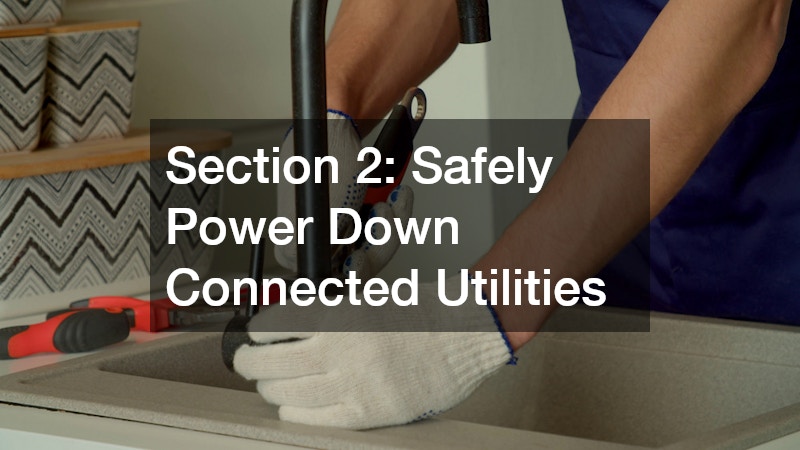
Once the primary water flow has been arrested, your immediate focus must shift strictly to life safety. The intersection of escaped water and residential utilities creates a highly lethal environment.
-
Cut the Electricity to Affected Areas: The risk of electrocution during a flood is exceptionally high. Water is a highly effective conductor of electricity, and if standing water reaches the level of wall outlets, power strips, or exposed wiring, the entire puddle becomes deadly.
-
If you can reach your main breaker panel without stepping into any water, do so immediately.
-
Flip the individual circuit breakers corresponding to the flooded rooms to the “off” position.
-
If the breaker box itself is located in a flooded basement, do not attempt to walk through the water to reach it. You must contact your utility provider to cut the power to the entire property from the outside grid.
-
-
Secure Your Heating Systems to Prevent Burnout: Appliances that rely on a constant supply of water can become severe fire or explosion hazards if they continue to run while empty. If you have drained the system or shut off the main, these appliances are now starving.
-
Locate the energy source for your heating systems. If they are gas-powered, turn the gas valve perpendicular to the supply line. If they are electric, flip the corresponding heavy-duty breaker switch.
-
Address the distinct dangers of flooded or malfunctioning water heaters, explaining how to cut the fuel source safely. If the tank itself has ruptured and dumped its contents, the internal heating elements will rapidly overheat and melt, or the gas burner will scorch the empty tank, risking a structural fire. Note that while a fully blown-out tank will almost certainly eventually require a completely new water heater installation, your only focus right now in the midst of the crisis should be turning the power and fuel off to prevent a catastrophic fire or explosion hazard.
-
-
Drain the Pipes to Relieve Pressure: Even after the main valve is shut off, hundreds of feet of piping throughout your property will still hold gallons of residual water. This water will continue to drain out of the break in the pipe. To minimize this, open several outdoor spigots and turn on the faucets in the lowest level of your home (like a basement sink). This uses gravity to safely pull the remaining trapped water out of the vertical pipes and directs it safely down the drains or outside, rather than letting it bleed out onto your floors.
Section 3: Contain the Water and Protect Your Property
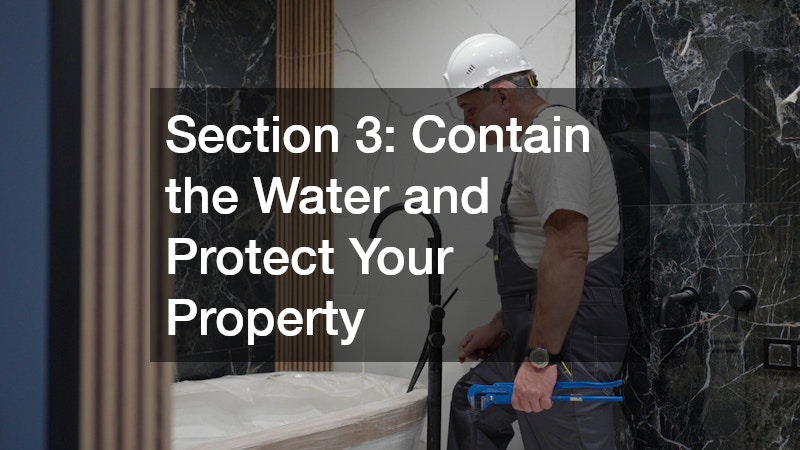
With the water source secured and the area rendered electrically safe, you must move rapidly to triage the physical damage. Your goal in this phase is to physically remove as much standing liquid as possible and protect your valuable assets from further absorption.
-
Use Buckets, Towels, and Wet Vacuums Effectively: Do not wait for professionals to arrive before you begin physical mitigation.
-
Use heavy, thick towels or old blankets to build temporary dams to prevent water from flowing under baseboards, into adjacent dry rooms, or down staircases.
-
Deploy a wet/dry shop vacuum if you have safely secured the electricity. Standard household vacuum cleaners will be instantly destroyed and pose an extreme shock hazard if used on liquids. Empty the wet vacuum basin frequently to prevent it from overflowing.
-
Use push brooms to sweep standing water toward floor drains if they are available and functional.
-
-
Move Valuables and Furniture Out of Harm’s Way: Porous materials will wick up moisture rapidly.
-
Prioritize lifting electronics, critical paperwork, and irreplicable family heirlooms off the floor and moving them to a completely dry room.
-
Untreated wood furniture will absorb moisture through its legs, causing the wood to swell, crack, and transfer dark wood stains permanently onto wet carpets. If you cannot move heavy furniture out of the room, lift each leg and place aluminum foil or plastic wrap underneath to break the contact with the wet flooring.
-
Roll up saturated area rugs and remove them immediately; they trap moisture against the floorboards and accelerate warping.
-
-
Identify Mysterious Water Sources: Sometimes, the emergency is insidious. You may find rapid pooling, saturated carpets, or warping floorboards, but absolutely no dripping pipes, overflowing fixtures, or obvious broken supply lines are visible anywhere in the room.
-
Pay attention to the temperature of the water and the floor. Warm spots on the floor, especially in homes built on concrete foundations, or unexplained bubbling water coming up from beneath the tile, usually require a specialized slab leak detection service to pinpoint the broken copper pipe buried deep under the concrete foundation.
-
Take extensive photographs and videos of the damage, the water level, and the ruined items before you move too many things. You will absolutely need this documentation for your upcoming insurance claims. Advise readers to look up reputable local plumbing services while they document the damage to get a head start on the mitigation process, as finding the root cause of hidden leaks requires specialized acoustic and thermal imaging tools that the average homeowner does not possess.
-
Section 4: Manage Waste-Related Backups with Extreme Caution
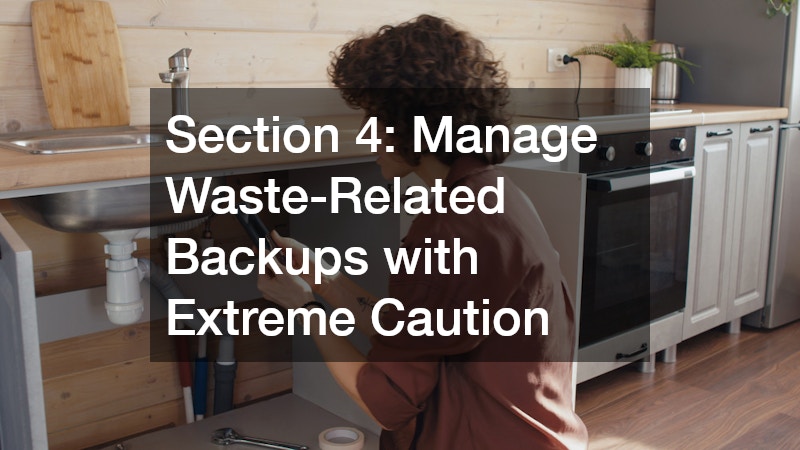
Not all emergencies involve clean, pressurized municipal water. When the crisis involves the reversal of your drainage system, the situation escalates from a mere structural threat to a severe biological and environmental hazard. Dealing with raw sewage requires extreme caution, specialized personal protective equipment, and a strict adherence to sanitary protocols.
-
Stop Using All Plumbing Fixtures Instantly: It sounds obvious, but in the panic of the moment, people often make grave mistakes. If raw sewage or foul-smelling gray water is backing up into your first-floor bathtubs, basement utility sinks, or floor drains, it means the main exit line leaving your property is completely blocked.
-
Do not wash your hands. Do not run the dishwasher. Do not run the washing machine.
-
Most importantly, do not flush any toilets. If the underground exit is blocked, flushing a toilet upstairs will simply force that contaminated water to find the nearest exit point downstairs, making the flooding and the biological hazard exponentially worse.
-
-
Avoid Chemical Drain Cleaners During a Total Blockage: When faced with a stubborn backup, many people instinctively reach for industrial, store-bought liquid drain clearers. In a complete emergency blockage, this is one of the most dangerous actions you can take.
-
These liquids rely on highly corrosive chemical reactions (often involving lye or sulfuric acid) to burn through hair and grease.
-
If the line is completely blocked by tree roots or a collapsed pipe, the chemicals will not clear it. Instead, they will sit stagnant in your pipes, creating a toxic, boiling, caustic pool.
-
When a professional eventually arrives to open the pipe or dismantle the trap, this highly pressurized, corrosive acid can splash onto their skin and into their eyes. Furthermore, these chemicals generate immense heat that can literally melt older PVC pipes or eat through corroded cast iron, turning a simple clog into a massive repiping job.
-
-
Identify the Source of the Contamination: You need to determine the scope of the backup to understand how to fix it.
-
Look outside at the street. If your neighbors are also experiencing backups, or if water is pooling out of municipal manhole covers, the city’s main infrastructure has failed, and you must contact the municipal water authority immediately.
-
If the issue is isolated strictly to your property, the failure is yours to fix. Explain that rural properties relying on independent waste management experiencing extreme, sudden backups likely need immediate septic tank pumping to relieve the overloaded, overfilled underground system.
-
Alternatively, for city-connected homes experiencing constant gurgling and raw waste returns, the problem is often aggressive tree roots crushing their underground lines. In these instances, the ultimate fix will likely involve a massive sewer lateral repair, requiring excavation of the front yard, once the immediate indoor mess is completely sanitized and structurally dried.
-
Section 5: Follow Proper Protocols for Non-Residential Buildings
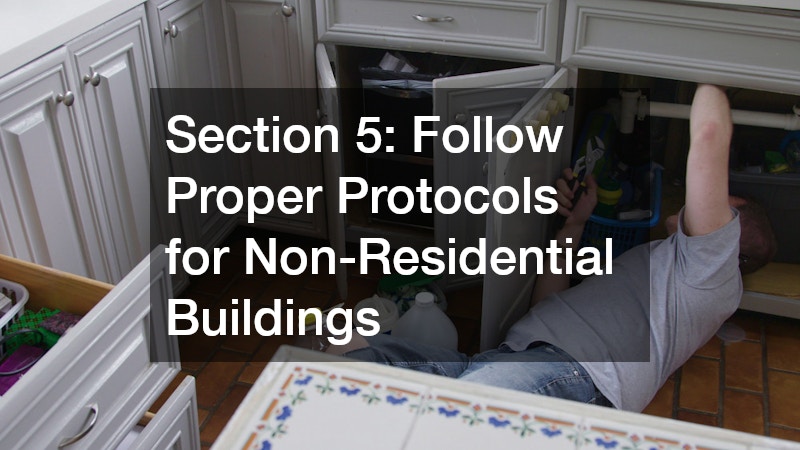
When a massive water event occurs in an office building, a retail store, an industrial warehouse, or a restaurant, the stakes are altered significantly. The focus shifts from protecting personal belongings to mitigating severe legal liabilities, managing complex commercial infrastructure, and minimizing the devastating financial impact of operational downtime.
-
Evacuate and Secure the Affected Zones Promptly: The very first action in a commercial setting is protecting the public and your employees.
-
Immediately clear out employees, vendors, and customers from the flooding area.
-
Put up highly visible hazard signage, physical barricades, and caution tape. The legal liability for a slip-and-fall injury on wet commercial flooring can easily cost a company more in lawsuits than the physical water damage itself.
-
Assign specific staff members to manage the perimeter and ensure nobody accidentally wanders into the danger zone or attempts to use compromised electrical equipment.
-
-
Notify Property Managers and Stakeholders: The chain of command in leased commercial spaces is often complex, and determining immediate financial responsibility can be tricky.
-
If you are a tenant leasing the space, contact the property management company or the building landlord instantly. Their on-call maintenance teams usually have primary jurisdiction over the building’s main water infrastructure and shutoff protocols.
-
Review your commercial lease agreement later to understand who is responsible for initiating the permanent repairs and handling the subsequent commercial insurance claims, but do not let bureaucratic delays stop you from performing immediate physical damage mitigation.
-
-
Fast-Track Repairs to Minimize Operational Downtime: In the residential sector, being displaced is a massive inconvenience. In the commercial sector, every single hour the facility remains closed represents bleeding revenue, missed fulfillment deadlines, and damage to consumer trust.
-
You must prioritize returning the facility to a code-compliant, sanitary status so the doors can safely reopen to the public. Health inspectors and safety regulators will demand proof of proper remediation if the flooding involved any form of contamination or structural compromise.
-
Highlight that large-scale facilities require heavy-duty commercial plumbing services due to their incredibly complex industrial boilers, multi-story pressurized pipe networks, and specialized grease traps. These systems operate at much higher capacities than residential layouts and require highly specialized knowledge to safely disable and repair.
-
Emphasize that finding a trusted contractor immediately is essential. Prolonged facility closures and repeated system failures can severely impact the daily revenue and long-term reputation of any enterprise, making it vital to have an existing relationship with a highly competent plumbing business capable of deploying an entire fleet of technicians to triage your facility at a moment’s notice.
-
Conclusion
Navigating a massive water event in your home or commercial space is undoubtedly one of the most stressful experiences a property owner can face. However, by adhering strictly to the protocols outlined above, you can transform a chaotic, panic-driven situation into a manageable sequence of logical steps. The golden rules of any such crisis remain constant: act swiftly to shut off the main water source, meticulously secure the area by killing electrical power to the affected zones, and immediately begin containing the spill to mitigate the spread of damage.
While knowing how to react in the heat of the moment is vital, the ultimate takeaway from this guide should be the unparalleled value of proactive preparedness. Do not wait for a pipe to burst at two in the morning to start searching for a flashlight and wondering where your main utility valves are hidden.
Your call to action today is simple but incredibly important. Take fifteen minutes this weekend to walk through your property. Locate your main water shutoff valve, clear away any boxes or debris blocking it, and visibly tag it with bright tape or a customized label. Test the valve to ensure it turns smoothly and is not seized from years of inactivity. Finally, compile a basic emergency toolkit containing heavy-duty towels, a flashlight, a bucket, and a printed list of reliable emergency contacts. By investing a small amount of time in preparation today, you ensure that if the worst does happen, you will be equipped to protect your property, your safety, and your peace of mind.