Navigating the healthcare needs of a multi-generational household is a complex, often exhausting endeavor. When it comes to oral health, the challenge is magnified by the sheer diversity of care required across a single lifetime. In one household, you might have a toddler requiring their first gentle checkup, a teenager navigating the awkwardness of orthodontic alignment, an adult needing complex restorative work, and a grandparent seeking comfortable prosthetic solutions. Managing these disparate needs can quickly turn into a logistical nightmare.
The cost of a fractured approach to healthcare is high. If you fail to plan appropriately, you will find yourself constantly driving across town to multiple separate clinics, managing a chaotic calendar of appointments, and dealing with the financial strain of disjointed insurance billing. Worse still, a fragmented approach means no single provider has a comprehensive view of your genetic predispositions or systemic health history. The ultimate goal should be a centralized, streamlined approach to care that eliminates stress rather than adding to it.
This comprehensive guide is your roadmap to evaluating and selecting comprehensive oral healthcare. We will move beyond superficial online ratings and provide a logical, structured framework for decision-making. You will learn how to audit your household’s specific life-stage requirements, evaluate modern clinical technologies, and assess specialized treatment philosophies. By the end of this guide, you will be equipped to find a centralized home for your health—a place where clinical excellence meets logistical convenience, ensuring that every member of your household receives exceptional care under one roof.
Audit Your Household’s Diverse Oral Health Needs
The search for exceptional healthcare cannot begin with a generic internet query. If you simply type a broad search term into your browser, you will be overwhelmed by marketing language and paid advertisements that tell you nothing about the actual clinical competence of a practice. To find a provider who can genuinely serve your entire household, you must first turn inward and conduct a rigorous, brutally honest audit of what your family actually needs.
Map Out Life-Stage Requirements for Every Family Member
Your first actionable step is to create a comprehensive matrix of your household’s health status. Sit down and create a simple spreadsheet. Dedicate a row to every individual living under your roof.
-
Document the Demographics: List the current age and specific life stage of each person. A six-year-old losing primary teeth requires a vastly different clinical approach than a fifty-year-old experiencing enamel wear and gum recession.
-
Assess Psychological Needs: Be honest about the emotional barriers to care. Note who suffers from severe anxiety, who requires sedation, or who has special behavioral needs. A brilliant clinician is useless if they lack the bedside manner to calm a terrified patient.
-
Anticipate Future Treatments: Look beyond routine cleanings. Does your teenager have an overbite that will require intervention in the next two years? Does your spouse grind their teeth at night? Identifying these specialized needs early helps you filter out clinics that only offer basic maintenance.
By defining your exact parameters, you transform your search from a shot in the dark to a targeted mission to find the best dentists in your metropolitan area who are uniquely equipped to handle your family’s specific combination of needs.
Prioritize Continuity of Care Across Generations
There is immense, compounding value in establishing a long-term medical relationship. In an era dominated by high-turnover, corporate-owned clinics where you might see a different doctor at every visit, seeking out dedicated continuity of care is a profound advantage.
-
The Power of Historical Context: When you partner with dedicated family dentists, you are hiring a medical detective who tracks your biological history over decades. They learn your genetic predispositions to issues like aggressive decay or periodontal disease. This historical context allows them to catch microscopic changes in your x-rays that a new doctor might dismiss as a baseline anomaly.
-
Seamless Transitions: A centralized practice allows a child to transition seamlessly from pediatric care into adolescent and adult care without having to change locations, transfer massive files, or rebuild trust with a stranger.
-
Consolidated Trust: When a single practitioner successfully treats your teenager, your spouse, and your aging parents, you build a foundation of absolute trust. This eliminates the second-guessing and anxiety that often accompany major medical decisions, allowing you to move forward with treatment plans confidently.
Evaluate Clinical Credentials and Office Logistics

A brilliant practitioner operating in a disorganized, poorly managed environment will still result in a terrible patient experience. The administrative infrastructure of a practice dictates how easily you can access your care, how transparent your financial obligations will be, and how comfortable you will feel during your visits.
Analyze Operational Efficiency and Insurance Compatibility
Do not underestimate the impact of front-desk logistics on your willingness to maintain routine appointments. A frustrating billing process or a chaotic waiting room is often the primary reason patients abandon their treatment plans.
-
Verify Financial Alignment: Before you even schedule a consultation, call the prospective clinic and ask to speak directly with the billing coordinator. Ask them to verify your specific insurance network status. Furthermore, ask about their philosophy on out-of-pocket expenses. Do they offer transparent, pre-treatment estimates? Do they work with third-party healthcare financiers like CareCredit for larger, unexpected procedures?
-
Assess the Physical Environment: Modern, well-managed dentist offices are designed to minimize clinical anxiety. When you arrive for a tour, pay attention to the sensory details. Is there ample, stress-free parking? Is the waiting area clean, quiet, and devoid of the harsh, antiseptic smells associated with outdated clinics?
-
Demand Scheduling Flexibility: If you are managing multiple children and working a full-time job, you cannot afford a clinic that only operates from nine to five on weekdays. Look for practices that offer early morning slots, late evening availability, or dedicated family-block scheduling where your entire household can be seen simultaneously in different operatories.
Verify the Scope of Preventative and Diagnostic Standards
The core of your oral healthcare should always be preventative. The goal is to stop microscopic issues before they devolve into agonizing, expensive emergencies. This requires a provider who heavily invests in modern diagnostic technology.
-
Look for Low-Radiation Digital Imaging: Traditional film x-rays are obsolete. Ensure the practice utilizes digital sensors, which reduce radiation exposure by up to ninety percent, provide instant high-definition images on a monitor, and allow the doctor to zoom in on potential micro-fractures in the enamel.
-
Inquire About Advanced Diagnostics: Ask if the clinic utilizes intraoral cameras—small wand-like devices that project high-resolution video of your mouth onto a screen, allowing you to see exactly what the doctor sees. Furthermore, inquire about laser cavity detection technology, which can identify decay beneath the surface of the tooth long before a traditional metal explorer would catch it.
-
Assess the Hygiene Program: A robust foundation of general dentistry services is non-negotiable. This includes far more than a quick polish. It involves meticulous periodontal charting (measuring the depth of your gum pockets to check for bone loss), comprehensive oral cancer screenings utilizing specialized ultraviolet lights, and customized remineralization therapies for patients prone to decay.
Assess Specialized Approaches to Care and Comfort
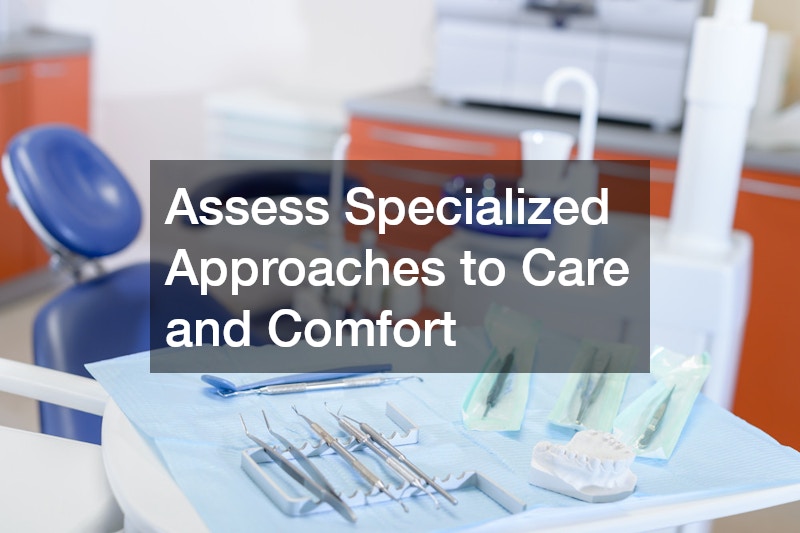
Every individual interacts with the healthcare system differently. For some, a medical environment induces severe panic; for others, standard treatments conflict with their broader philosophies on bodily wellness. Finding a provider who respects and adapts to these specialized psychological and biological needs is paramount.
Protect Early Childhood Experiences with Gentle Specialists
The way a child experiences their first few medical appointments dictates their attitude toward healthcare for the rest of their life. Early trauma, a lack of patience, or a clinical environment that feels intimidating can trigger a lifelong phobia, leading to severe neglect in adulthood.
-
Tour the Clinical Area Before the Appointment: Do not wait for the day of the checkup to discover if a clinic is kid-friendly. Request a brief walkthrough. Look for environments that disarm fear: brightly lit operatories, televisions mounted on the ceilings to provide distraction, and an overall atmosphere of warmth rather than sterile intimidation.
-
Evaluate Behavioral Management Skills: Highly trained pediatric dentists possess a unique psychological toolkit. They do not just scale teeth; they use specialized communication techniques, such as the “tell-show-do” method, to demystify terrifying instruments. They utilize positive reinforcement and are specifically trained to manage sudden behavioral meltdowns without resorting to impatience or frustration.
Explore Biocompatible and Whole-Body Health Philosophies
In recent years, the medical community has deeply acknowledged the oral-systemic connection—the irrefutable fact that the health of your mouth directly impacts the health of your heart, your immune system, and your brain. If you are deeply invested in whole-body wellness, you need a provider who shares this integrative perspective.
-
Question the Materials Used: If you are concerned about the toxicity of traditional dental materials, interview the provider about their specific inventory. Do they utilize exclusively mercury-free, BPA-free composite resins? If you have old, failing silver amalgam fillings, do they follow strict, isolation-based protocols to remove them safely without exposing you to vaporized heavy metals?
-
Look Beyond the Teeth: The growing field of holistic dentistry represents a paradigm shift in care. These practitioners view the mouth as the gateway to the body. They will routinely evaluate your airway to check for signs of sleep apnea, discuss how your nutritional habits are driving systemic inflammation, and utilize ozone therapy to manage bacterial infections naturally. If your family prioritizes a naturopathic or integrative lifestyle, finding a practitioner who aligns with these values will drastically improve your healthcare experience.
Review Advanced Restorative and Aesthetic Solutions

As the adults in your household age, basic cleanings will eventually give way to the need for structural repair and visual enhancement. Enamel wears down, old fillings crack, and coffee or wine takes a toll on the brightness of a smile. When these issues arise, you want a provider who seamlessly blends structural engineering with high-end artistry.
Investigate Smile Design and Visual Enhancements
Aesthetics are not a matter of pure vanity; the appearance of your smile heavily influences your self-confidence, your professional presence, and your psychological well-being. If an adult in your household is unhappy with their smile, they need an artist, not just a mechanic.
-
Request Visual Proof of Competence: Never assume a doctor is skilled at aesthetic enhancements simply because they offer them. Ask to see a digital look-book of their specific before-and-after cases. Look for symmetry, natural color matching, and proper proportional alignment in their previous work.
-
Understand the Aesthetic Toolkit: Highly skilled cosmetic dentists have a vast array of solutions at their disposal. They can utilize specialized lasers to recontour uneven gum lines, apply ultra-thin porcelain veneers to mask severe tetracycline staining or structural gaps, and utilize professional-grade bleaching agents that lift deep stains without causing agonizing thermal sensitivity.
Evaluate Same-Day Technology for Damaged Structural Teeth
When a tooth suffers massive structural failure—whether from a deep fracture from chewing ice or the excavation of a massive cavity—it requires a protective cap to hold the remaining organic structure together. Historically, this meant walking around for three weeks with a fragile temporary fix while a third-party laboratory manufactured the permanent solution. Today, that timeline is unacceptable.
-
Seek Out CAD/CAM Milling Technology: Ask prospective clinics if they have invested in on-site Computer-Aided Design and Manufacturing technology, such as the CEREC system. This technology allows the doctor to take a rapid 3D digital scan of your broken tooth, design the restoration on a computer, and mill the permanent piece out of a solid block of porcelain right in the office.
-
Compress the Timeline: This technology allows you to walk into the clinic with a broken tooth and walk out two hours later with a permanent, flawlessly matched dental crown securely bonded in place. Furthermore, modern materials like zirconia and lithium disilicate have rendered old-fashioned metal-based caps obsolete. These modern ceramics are incredibly durable, bio-compatible, and will never leave a dark, gray line at your gum tissue as you age.
Investigate Permanent Tooth Replacement Options
Tooth loss is a severe biological event. When a tooth is extracted and not replaced, the jawbone in that area immediately begins to resorb and melt away due to a lack of stimulation. This leads to the shifting of adjacent teeth, severe bite misalignment, and eventually, the premature aging and collapse of the facial structure. If you have older adults in your household, evaluating how a clinic handles missing teeth is a critical step in the vetting process.
Analyze Modern Surgical Solutions for Single or Multi-Tooth Loss
The gold standard for replacing missing structural anatomy is no longer a traditional bridge that requires grinding down healthy adjacent teeth. The modern approach relies on permanent, surgical integration.
-
Demand Precision Imaging for Surgery: If a provider offers surgical placements, they must utilize a 3D Cone-Beam Computed Tomography (CBCT) scanner. A two-dimensional x-ray cannot accurately show the width of your jawbone or the exact location of your sinus cavities and major facial nerves. 3D mapping is a non-negotiable safety requirement for surgical planning.
-
Understand Osseointegration: The ideal solution for a missing tooth involves placing a biocompatible titanium post directly into the jawbone. Over the course of a few months, the living bone fuses directly to the microscopic grooves of the titanium. This creates an artificial root system known as a dental implant, which completely halts bone loss and provides a permanent, immovable foundation for a porcelain replacement tooth.
Assess Advanced Removable and Implant-Supported Prosthetics
For patients who have lost an entire upper or lower arch of teeth, the focus shifts to total functional rehabilitation. The inability to chew nutrient-dense foods like raw vegetables or proteins drastically impacts the systemic health and life expectancy of seniors.
-
Move Beyond Adhesives: Traditional, purely tissue-supported acrylic appliances often slip, cause painful friction sores, and require messy pastes to stay in place. When vetting comprehensive denture services, ask the provider about their protocols for achieving a custom, high-suction fit that prioritizes patient dignity and comfort.
-
Explore Hybrid Arch Solutions: The most life-changing advancement for edentulous patients is the implant-retained overdenture. By placing just four to six strategic titanium posts into the jaw, a doctor can design a full-arch prosthetic that physically snaps onto the implants. This hybrid solution completely eliminates slipping, restores the ability to chew tough foods with immense force, and allows the patient to speak and smile with absolute confidence, free from the fear of an embarrassing appliance failure.
The Lasting Value of a Deliberate Choice
Selecting a healthcare provider for your entire household is not a task to be rushed or delegated to an internet algorithm. It is a profound responsibility that requires a methodical, data-driven approach. By taking the time to audit your specific life-stage requirements, rigorously evaluate administrative efficiency, and demand modern technological standards, you protect far more than just your family’s physical health. You protect your time, your financial resources, and your peace of mind.
The ideal medical provider is not just a technician you see twice a year for a routine cleaning; they are a vital, long-term partner in your household’s overall health journey. They are the professionals who will calm your child’s fears, restore your spouse’s confidence, and preserve the dignity and functionality of your aging parents. When you find a clinic that successfully balances elite clinical execution with deep, empathetic patient care, the chaotic burden of managing family health dissolves into a streamlined, predictable routine.
Do not wait for a sudden midnight toothache or a broken filling to force a panicked, unresearched decision. Take actionable steps today. Use the matrix framework to outline your household’s needs, identify at least three promising practices in your area, and schedule an introductory consultation with their staff this week. A proactive, deliberate choice today is the ultimate investment in your family’s lifelong wellness.